Let us talk about trimming trees around your place here in Kyle. It is not just about making things look tidy. It is also about keeping your trees healthy as well as keeping your property safe. You need to know what you are doing. If you do not know what you are doing, you can do more harm than good. Our team has seen this happen. This is not rocket science, but it does take some common sense as well as knowing your limits.
Before You Make a Single Cut
First things first, we will get you thinking about the bigger picture. You would not just start building a house without a plan. The same goes for your trees.
Know Your Tree, Know Your Season
Different trees need different care. Timing is an important detail, especially here in Central Texas. For most trees, the best time for major pruning is late winter to early spring. This is before new growth really kicks in. Trees are dormant then, and they can heal up faster. If you have oak trees in Kyle, you absolutely need to avoid pruning them between February 1st and June 30th. That is prime time for oak wilt transmission. That disease can wipe out a whole street of oaks in Kyle. If you have to cut an oak during that window, you must seal the wound immediately, within 15 minutes.
For other common Kyle trees like cedar elms or pecans, the dormant season is still generally best. These trees are a bit more forgiving. Always do a quick search for your specific tree type if you are unsure.
Safety First, Always
This is not a suggestion. This is a rule for tree trimming in Kyle. You need the right gear. This includes sturdy gloves, safety glasses, as well as good footwear. If you are using power tools, you should add a hard hat as well as hearing protection. Do not mess around with ladders if you are not comfortable. Falls from ladders while trimming trees are not good. Our team has seen some bad ones.
You must look up. Are there power lines anywhere near the branches you are thinking of cutting? If so, you need to stop right there. You should not even think about it. Contact the utility company. Electricity and tree branches do not mix. This can be deadly. Any trimming within ten feet of a power line needs to be done by trained professionals. Kyle Tree Service can handle these difficult jobs.
During the Trim: What You Can Tackle
You have your plan and your safety gear. What can a homeowner realistically do for tree trimming in Kyle?
- Small stuff: You can usually handle small branches. This includes anything you can reach from the ground with hand pruners or a pole saw. We are talking about branches that are an inch or two in diameter. This might be up to four inches if you are confident and have the right tools.
- Dead, diseased, or crossing branches: Removing these branches is good for the tree's health. This can be done pretty much any time of year. You should look for branches that are brittle, discolored, or rubbing against each other.
- Suckers and water sprouts: These are fast-growing, weak shoots. They pop up from the base or along the limbs. You should get rid of them. They just steal nutrients from the tree.
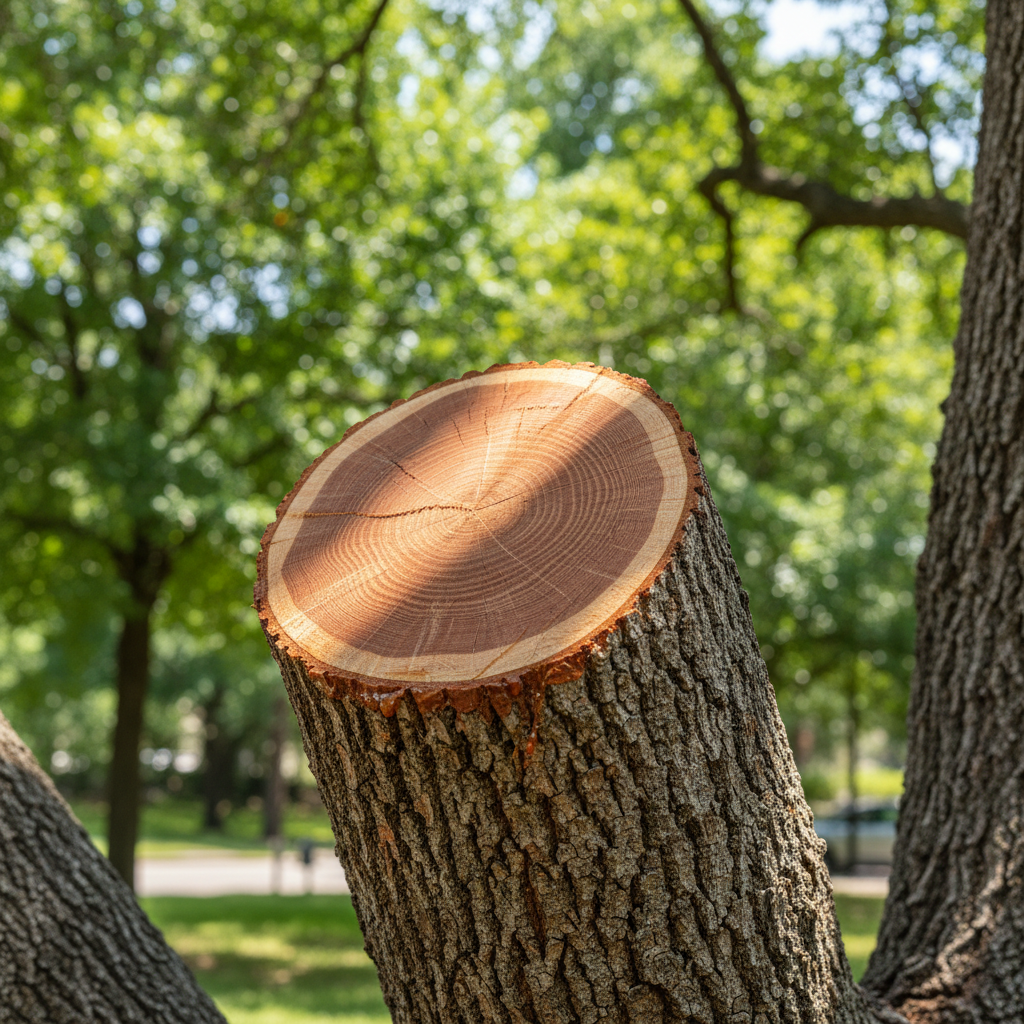
When you cut, you must make clean cuts. You should use sharp tools. Do not leave stubs. You should not cut flush against the trunk either. You want to cut just outside the branch collar. That is the slightly swollen area where the branch meets the trunk or a larger limb. That collar is where the tree heals itself. You should not take off too much. A good rule of thumb for DIY tree trimming is no more than 10-15% of the tree's foliage in one go. Over-trimming stresses the tree out.
When to Call a Pro (That is Us, Kyle Tree Service)
Our team is all for DIY. There are times when you just need to call in the experts. It is not worth the risk to your safety or your trees in Kyle.
- Big branches: If a branch is larger than four inches in diameter, or if you need a ladder to reach it, you must call an arborist. You should stay on the ground.
- Branches near power lines or your house: We already talked about power lines. If branches are overhanging your roof or too close to your home, they can cause damage during a storm. They can also invite pests. That is a job for a professional tree service.
- Signs of disease or structural issues: If you see decay, fungi, big cracks, or the tree just looks unhealthy, you should get a professional assessment. Kyle Tree Service can diagnose problems as well as recommend the right course of action.
- Storm damage: After a big storm, trees can be unstable as well as dangerous. Do not try to clean it up yourself.
- If you are unsure: When in doubt, call Kyle Tree Service. It is always better to be safe than sorry. A professional arborist can make sure the job is done right. This will be done without hurting your tree or your property.
After the Job is Done
Once the trimming is complete, whether you did it or Kyle Tree Service did, you should keep an eye on your tree. Make sure the cuts are healing well. You will want to make sure the tree is getting enough water. This is especially true during our hot Kyle summers. Newly planted trees or those that have undergone important trimming might need extra attention. A good watering schedule, especially for young trees, can make a huge difference in their recovery as well as their overall health.
Taking care of your trees is an investment in your property as well as our Kyle community. You should do what you can safely. Do not hesitate to reach out to Kyle Tree Service when you need a hand. We are here to help keep your trees healthy as well as beautiful.