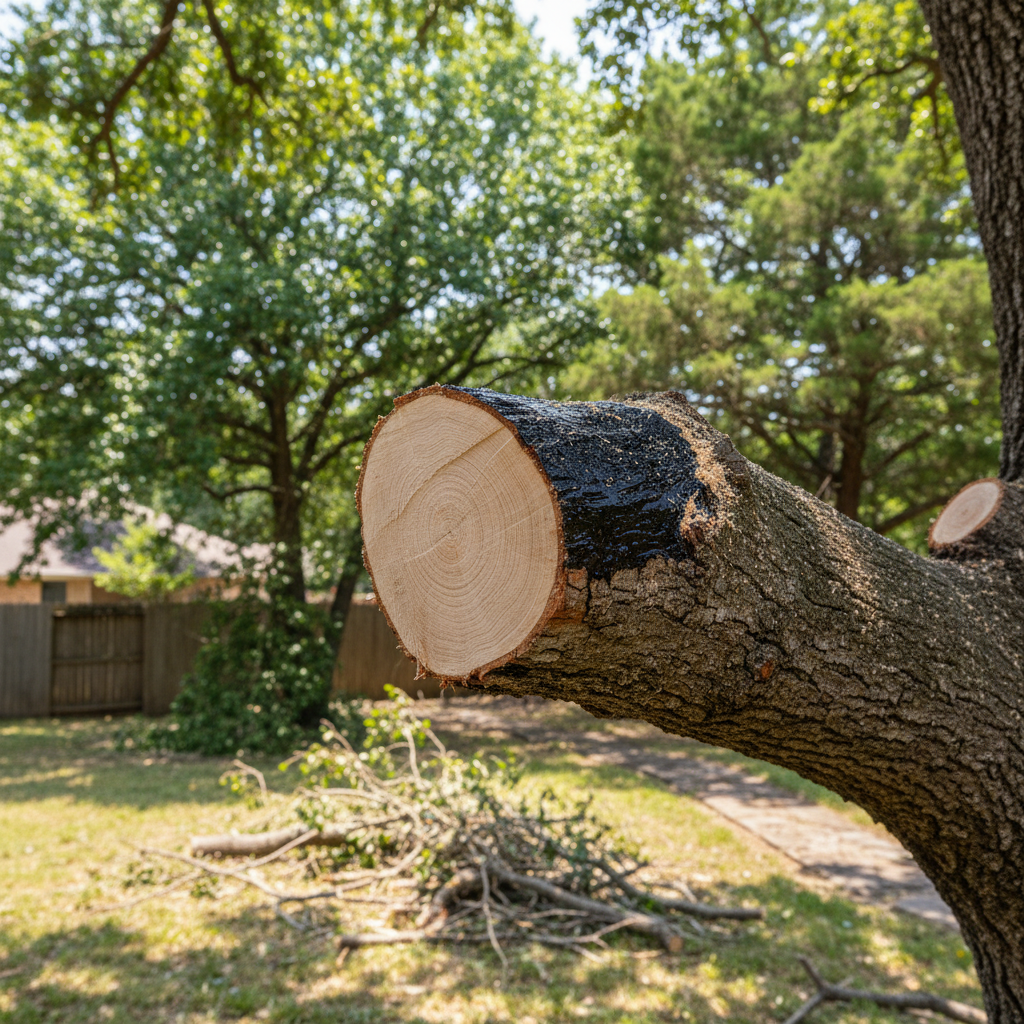
Why do my trees even need pruning? Can't they just grow naturally?
Look, trees in a forest? They're in a natural competition. They're fighting for light, water, and space, and they kind of prune themselves by shedding lower branches that don't get enough sun. But the trees in your yard, well, they're living in a totally different world. You've got houses, power lines, sidewalks, and kids playing. We prune for a few main reasons: safety, health, and aesthetics.
Safety means getting rid of dead or weak branches that could fall and hurt someone or damage your property. Health involves removing diseased or insect-infested parts, improving air circulation, and encouraging strong growth. And aesthetics? You want your yard to look good, right? Pruning helps shape the tree, promotes flowering, and keeps it from turning into an overgrown mess.
When's the best time to prune my trees in Kyle?
This is probably the most common question I get. For most deciduous trees – that's the ones that lose their leaves, like oaks, pecans, or elms – the dormant season is usually best. That means late fall through early spring, after the leaves have dropped and before new buds start to swell. Why then? The tree's less stressed, you can see the branch structure clearly without all the leaves, and it minimizes the risk of disease or insect infestation since those pests aren't as active.
Now, there are exceptions. If you've got a dead or hazardous branch, you don't wait; you get that off immediately, no matter the season. Flowering trees are a bit different too; you usually prune them right after they finish blooming. For example, if you prune a crape myrtle in the fall, you're cutting off next year's flowers. Different strokes for different folks, as they say.
What's the difference between 'thinning,' 'raising,' and 'reduction' pruning?
Good question, because these terms get thrown around a lot. They're all types of pruning, but they achieve different goals. Thinning is about selectively removing branches from the interior or canopy of the tree. It's not about making the tree smaller, but about improving air circulation, increasing light penetration, and reducing weight. You're trying to create a more open, balanced structure.
Raising, also called 'crown raising' or 'lift pruning,' is when we remove lower branches to provide clearance. This is super common around here, especially in neighborhoods like Plum Creek where trees grow fast and can start blocking sidewalks, driveways, or even your front door. It's all about getting those branches up and out of the way.
And then there's reduction, or 'crown reduction.' This is when you're actually decreasing the overall size of the tree's canopy. It's often done to reduce the risk of storm damage, especially with our strong Texas winds, or to keep a tree away from power lines or a house. You're aiming to maintain the tree's natural shape while making it smaller. You've gotta be careful with reduction, though; do it wrong and you'll end up with a bunch of weak suckers.
Can I prune large branches myself, or should I always call a pro?
Look, I'm a business owner, so naturally I'm going to say call a pro for anything significant. But honestly, it's about safety and expertise. If it's a small, easily accessible branch that you can reach safely from the ground with hand pruners or a pole saw, and you know what you're doing, go for it. But if you're talking about branches that require a ladder, a chainsaw, or that are near power lines, you need to call someone like Kyle Tree Service.
It's not just about getting the branch down; it's about doing it without injuring yourself, damaging your property, or harming the tree long-term. We've got the right equipment, the training, and the insurance. A trip to the emergency room or a damaged roof isn't worth saving a few bucks, is it?
How much pruning is too much? Can I kill my tree by over-pruning?
Absolutely, you can kill a tree by over-pruning, or at least severely stress it. A general rule of thumb is never to remove more than 25% of a tree's live canopy in a single year. For younger or stressed trees, that number should be even lower, maybe 10-15%. Trees need their leaves to produce food through photosynthesis. If you take too many leaves, the tree can't feed itself properly, and it'll weaken. This makes it more susceptible to pests, diseases, and environmental stress.
You'll see a lot of 'lion-tailing' out there, where people strip all the inner branches and leave just tufts at the ends. That's bad. It makes the remaining branches weak and prone to breaking. Good pruning is about thoughtful, selective removal, not just hacking away.
What's 'topping' and why is it so bad for my trees?
Topping is when someone cuts off the top of a tree's main branches, often leaving stubs. It's usually done by folks who want to quickly reduce a tree's height, but it's one of the worst things you can do to a tree. It's a hack job, plain and simple. When you top a tree, you're creating large, open wounds that are perfect entry points for disease and insects. The tree responds by sending out a flush of weak, fast-growing shoots called 'water sprouts' or 'suckers' right below the cuts.
These sprouts are poorly attached and much more likely to break off in a storm, creating a bigger hazard than you had to begin with. Topping also starves the tree, reduces its lifespan, and makes it look ugly. If someone suggests topping your tree, politely tell them no thanks and find a certified arborist or a reputable company like Kyle Tree Service that understands proper pruning techniques.